Evaluating the Back to Nature Editable Text Effect for Digital and Print Design
In the competitive landscape of digital marketing and print media, typography serves as a primary vehicle for brand communication. Designers and content creators frequently seek assets that balance aesthetic appeal with technical flexibility. The Back to Nature Editable Text Effect represents a specific category of design resources aimed at streamlining the creation of organic, earth-inspired typographic layouts. This article evaluates the utility, technical specifications, and practical applications of this asset to help designers determine if it aligns with their project requirements.
Understanding the Asset Structure and Functionality
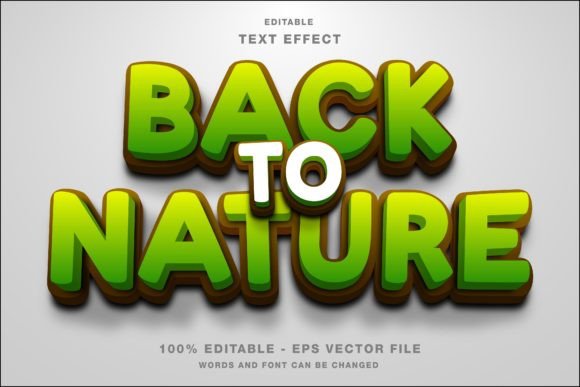
The core value proposition of the Back to Nature Editable Text Effect lies in its adaptability. Unlike static raster images where text is flattened and unchangeable, this resource is built for modification. It allows users to replace placeholder text with custom copy while maintaining the intricate stylistic elements defined by the effect. This is particularly relevant for professionals who need to produce multiple variations of a headline without reconstructing complex layer styles from scratch.
Technically, the asset is delivered in standard industry formats, specifically including EPS and JPG files within the main folder. The inclusion of EPS (Encapsulated PostScript) is critical for vector-based editing, ensuring that the text remains sharp and scalable regardless of the output size. The accompanying JPG files serve as quick-reference previews or ready-to-use elements for contexts where vector editing is not required. The text effect operates within the RGB color mode, which is the standard for digital displays, making it inherently suitable for web designs and social media promotions.
Strategic Applications Across Media Channels
When evaluating whether to integrate this text effect into a workflow, it is essential to consider the intended distribution channels. The RGB color profile indicates that the primary strength of this asset is digital deployment. For platforms such as Instagram, Twitter, and Facebook, where visual immediacy drives engagement, the organic aesthetic of the Back to Nature style can help brands stand out amidst cluttered feeds. The natural textures and earthy tones often associated with this style evoke feelings of sustainability, wellness, and authenticity, which are powerful psychological triggers in modern consumer marketing.
Beyond social media, the asset holds utility for digital publications and web headers. However, its application in print media requires careful consideration. While the EPS format supports high-resolution output, the RGB color mode may not translate perfectly to CMYK printing processes used in flyers, posters, magazines, and event papers. Designers intending to use this effect for physical prints must perform thorough color conversion tests to ensure that the vibrant digital hues do not appear muted or shifted when printed. For digital-first campaigns that may have secondary print components, this asset offers a cohesive look, provided that color management protocols are strictly followed.
Benefits of Using Pre-Made Editable Effects
The primary benefit of utilizing the Back to Nature Editable Text Effect is efficiency. Creating realistic natural textures—such as wood grain, leaf patterns, or stone effects—manually in Adobe Illustrator or Photoshop is time-consuming and requires advanced technical skill. By leveraging a pre-made editable effect, designers can reduce production time significantly. This allows for rapid iteration, enabling marketers to test different headlines and calls to action without being bottlenecked by the design process.
Furthermore, the customizable nature of the file ensures brand consistency. Users can easily adjust colors to match specific brand guidelines while retaining the structural integrity of the text effect. This balance between automation and control is crucial for agencies managing multiple clients or in-house teams maintaining strict visual identities. The ability to edit all elements means that the asset is not a rigid template but a flexible tool that can be adapted to various campaign themes.
Tradeoffs and Technical Considerations
While the convenience of editable text effects is evident, there are tradeoffs that potential users must acknowledge. One significant consideration is the learning curve associated with the software requirements. To fully utilize the editable features, users must be proficient in Adobe Illustrator or compatible vector graphics software. Those unfamiliar with layer management, clipping masks, or appearance panels may find the customization process challenging, potentially negating the time-saving benefits.
Another factor is the specificity of the aesthetic. The "Back to Nature" theme is distinct and evocative, but it is not universally applicable. It fits well with industries such as organic food, eco-tourism, wellness, and outdoor recreation. However, for technology firms, financial institutions, or luxury fashion brands seeking a sleek, minimalist, or futuristic look, this style may clash with the desired brand perception. In such cases, the asset might require extensive modification to fit, which could be more labor-intensive than creating a custom effect from scratch.
Additionally, the reliance on RGB color mode limits direct usage in professional offset printing without conversion. Designers working on high-end magazine spreads or large-format posters must account for the potential loss of vibrancy during the RGB-to-CMYK conversion. It is advisable to view this asset primarily as a digital-first solution, with print applications treated as secondary adaptations requiring careful proofing.
Comparing Alternatives and Decision-Making Insights
When deciding whether to adopt the Back to Nature Editable Text Effect, it is helpful to compare it with alternative approaches. One alternative is using static stock photos with overlay text. While this method is simple, it lacks the integration and professionalism of a true text effect, often resulting in a disjointed visual hierarchy. Another alternative is building custom text effects from scratch. This offers maximum creative freedom and perfect color control for print but demands significant time and expertise.
The Back to Nature Editable Text Effect occupies a middle ground. It is ideal for designers who need high-quality, thematic typography quickly but lack the time to build complex effects manually. It is also suitable for small business owners or marketers with basic design skills who want to elevate their social media graphics without hiring a professional designer for every post.
To make an informed decision, assess your project's primary medium. If the goal is to enhance digital engagement on social platforms or web banners, this asset is a strong fit due to its RGB optimization and visual appeal. If the primary goal is high-volume, multi-color offset printing, consider whether the effort required to convert and adjust colors is justified compared to using a CMYK-native design approach. Additionally, evaluate your team's technical proficiency. If you have access to Illustrator skills, the editable EPS files provide substantial value. If not, the JPGs may offer limited utility, restricting your ability to customize the text effectively.
Conclusion
The Back to Nature Editable Text Effect is a specialized resource that offers a blend of aesthetic charm and functional flexibility. Its strength lies in its ability to facilitate rapid creation of organic, nature-inspired typography for digital environments. By understanding its technical constraints, particularly regarding color mode and software requirements, designers can leverage this tool to enhance their visual communications efficiently. For projects prioritizing digital presence and thematic consistency with natural elements, this asset provides a practical and effective solution. However, for strictly print-focused or non-naturalistic branding needs, alternative design strategies may yield better results.